Toxoplasma–host interactions
How Toxoplasma takes over a cell, and how the host fights back.
The Saeij lab is a Toxoplasma research lab at UC Davis. We study Toxoplasma–host interactions: the secreted effectors that let the parasite spread, hide from the immune system and persist, and the host genes that decide who gets sick, mapped with genome-wide CRISPR screens.
What we study
Four questions, one parasite
Toxoplasma effectors and dissemination
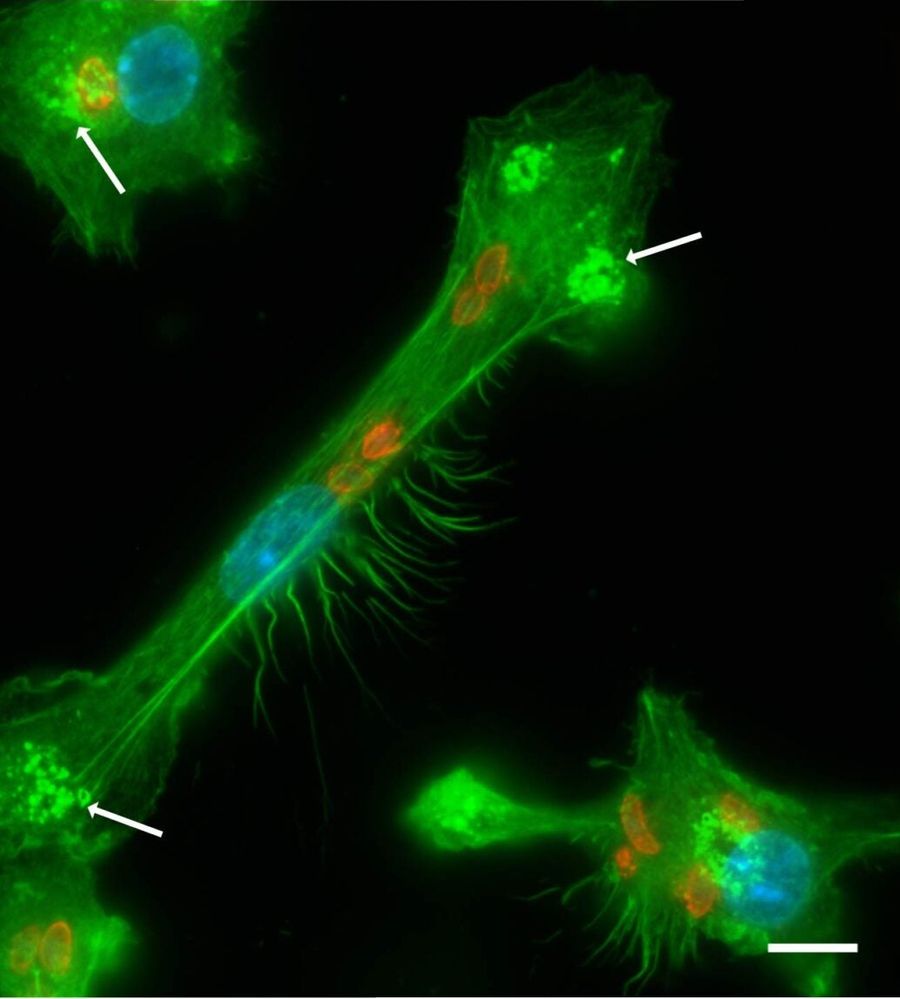
In vivo Toxoplasma CRISPR screens map the parasite genes needed to cross barriers and reach distant organs. The secreted effector TgWIP rewires dendritic cell actin and motility, and GRA28 and other GRAs turn infected macrophages hypermigratory. More on Toxoplasma effectors.
Immune evasion: surviving interferon-γ
Genome-wide screens in naive and IFNγ-activated mouse and human cells reveal how the parasite withstands the host’s main antiparasitic cytokine, from GRA45’s chaperone-like role to the GRA70 complex, which the parasite needs specifically in IFNγ-stimulated human cells. More on immune evasion.
Life inside the parasitophorous vacuole
The parasite grows inside a vacuole it must feed through. We study the pores (GRA17, GRA23, GRA47, GRA72) and the lipid machinery (GRA38, TgSEC14-LTP1) that move small molecules and lipids across its membrane. More on the vacuole.
Host and parasite genetics of toxoplasmosis
Why do some strains blind and others go unnoticed? Why do rats resist and mice succumb? We trace outcomes to strain-specific effectors such as ROP16 and GRA15 and to host pathways such as the NLRP1 inflammasome. More on host and parasite genetics.
Recent Toxoplasma papers
Latest from the lab
- 2026
Sensing the enemy within: Vγ9Vδ2 T cells as metabolic sensors of intracellular parasites
Rodriguez F et al. · Trends Parasitol
- 2026
- 2025
- 2025
- 2025
Funding
Supported by the NIH
Our research is funded by the National Institute of Allergy and Infectious Diseases, and our training by the NIH Office of the Director. The full award history is on the research page.
- Mechanisms of host leukocyte-mediated Toxoplasma dissemination in its host
- Restriction of Toxoplasma growth in human cells
- Comparative Medical Science Training Program

The lab
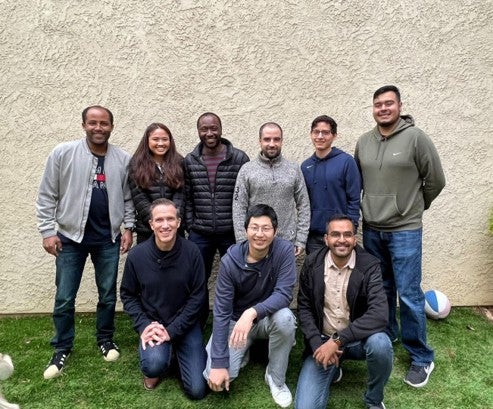
A small, international group
We are postdocs, graduate students and undergraduates in the Department of Pathology, Microbiology & Immunology at the UC Davis School of Veterinary Medicine, working side by side on the same parasite from very different angles.
“A lab with people from different backgrounds and countries is what keeps our research innovative.”
Everyone who is excited about host–parasite interactions is welcome here, regardless of background, nationality or immigration status.